
This September, Focus Vision surgeons Dr David Gunn and Dr Brendan Cronin will travel to London for the 44th Congress of the European Society of Cataract and Refractive Surgeons (ESCRS), being held from 11–15 September 2026.
ESCRS is one of the major international meetings in cataract and refractive surgery, bringing ophthalmologists, researchers and industry together to share emerging research, surgical techniques and technologies.
For our team, attending ESCRS is about much more than simply being at a conference. It is an opportunity to contribute to international surgical education, exchange ideas with colleagues from around the world and remain closely involved with developments that may shape the future of refractive and corneal surgery.
A Major Meeting for Refractive Surgery
Refractive surgery continues to evolve rapidly.
Modern vision correction extends well beyond a single laser procedure. Depending on a patient’s eyes, prescription, age and visual goals, treatment options may include corneal laser procedures, phakic intraocular lenses, lens-based procedures and more specialised approaches for patients with irregular corneas.
ESCRS 2026 brings many of these areas together, with the congress programme including refractive surgery education, the Global Refractive Symposium, instructional courses, surgical wet labs, research presentations and discussions of emerging technology.
For Dr Gunn and Dr Cronin, the congress provides an opportunity to both learn from and contribute to this international exchange of knowledge.
Dr Gunn and Dr Cronin Joining an International Faculty
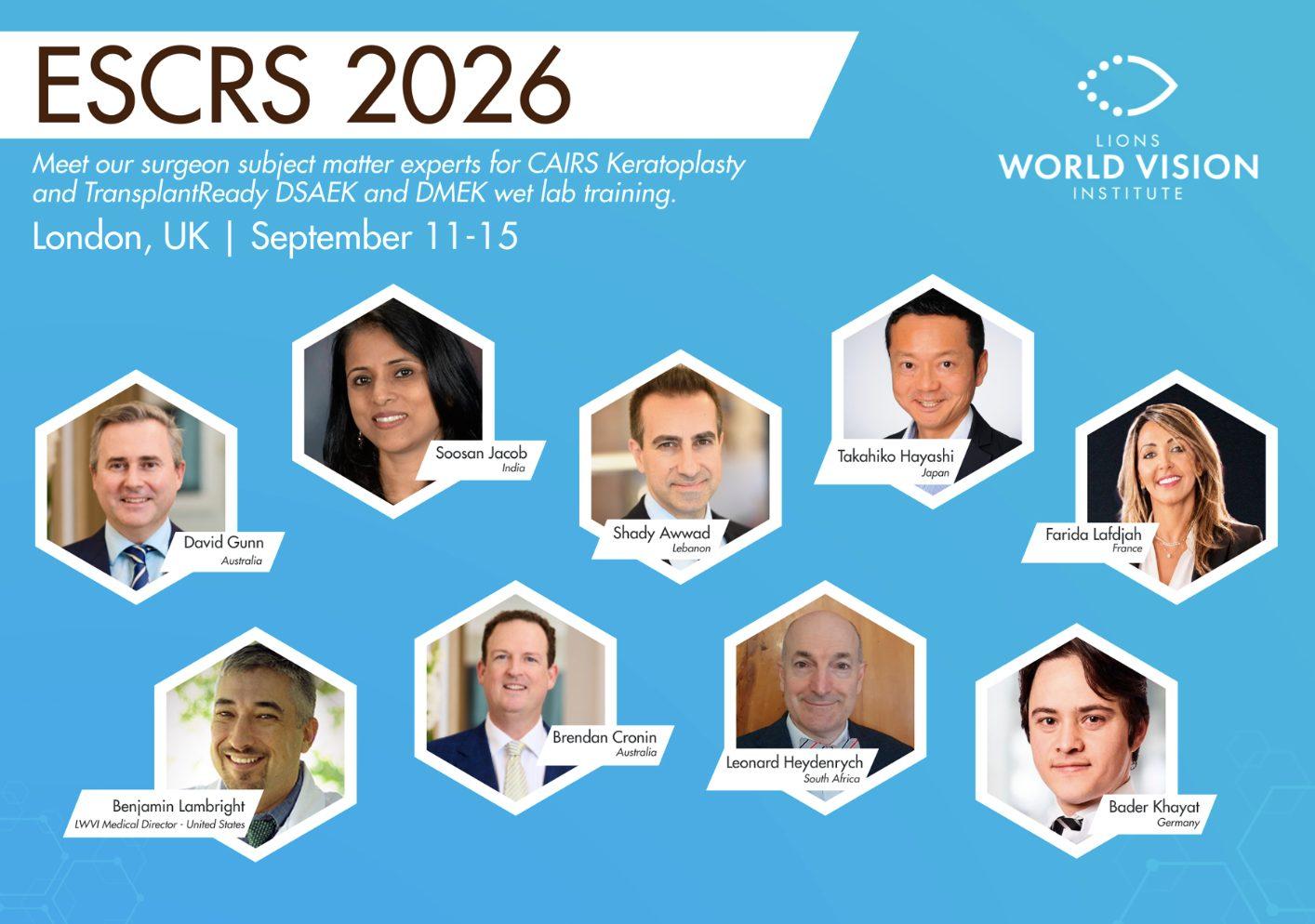
We are particularly pleased that Dr David Gunn and Dr Brendan Cronin have been invited to participate as expert instructors with Lions World Vision Institute during ESCRS 2026.
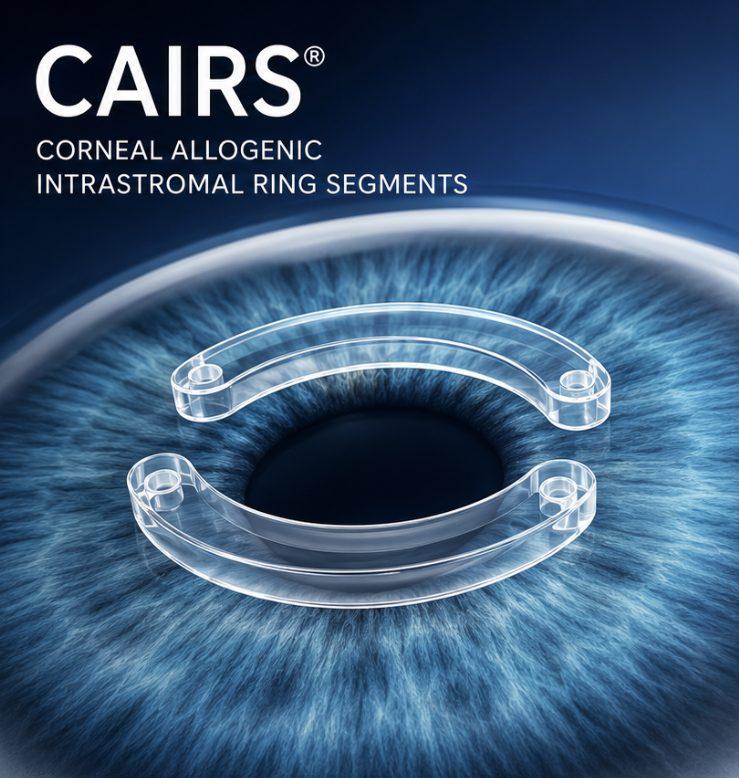
They will join an international group of corneal surgeons involved in educational activities surrounding CAIRS (Corneal Allogenic Intrastromal Ring Segments) and endothelial keratoplasty.
The program includes OptiGraft® CAIRS wet labs, CAIRS surgical planning sessions and TransplantREADY® DSAEK and DMEK wet lab training.
Hands-on surgical education such as this allows surgeons to discuss not only how a procedure is performed, but also patient selection, surgical planning and the nuances that can influence outcomes.
What Is CAIRS?
CAIRS is an evolving surgical approach used in selected patients with conditions that cause an irregular corneal shape, particularly keratoconus.
The technique uses segments of donor corneal tissue placed within channels in the patient’s cornea (Jacob et al., 2018). The aim is to alter and regularise the shape of the cornea and, in appropriately selected patients, potentially improve the quality of vision.
Like any corneal procedure, CAIRS is not appropriate for everyone. Careful assessment of the corneal shape, thickness, stability and overall eye health is required before treatment options can be considered.
Bringing International Education Back to Our Patients
One of the benefits of participating in meetings such as ESCRS is the opportunity to remain connected with ophthalmic developments beyond Australia.
New technology alone does not determine good patient care. Understanding where a technique fits, which patients may benefit and where established treatments remain preferable is equally important.
By contributing to international education while continuing to learn from colleagues around the world, Dr Gunn and Dr Cronin can bring those discussions back to the clinical decisions we make every day at Focus Vision.
For our patients, that means access to a team that remains actively engaged with the evolving fields of laser vision correction, refractive surgery and corneal treatment.
Thinking About Vision Correction?
If you are considering laser eye surgery or another form of refractive surgery, the first step is a comprehensive assessment to determine which options may be appropriate for your eyes.
Contact Focus Vision to arrange your initial suitability assessment with our team.
References
- European Society of Cataract and Refractive Surgeons. 44th Congress of the ESCRS, London, 11–15 September 2026 – Venue. congress.escrs.org/congress-information/venue
- Jacob S, Patel SR, Agarwal A, et al. Corneal allogenic intrastromal ring segments (CAIRS) combined with corneal cross-linking for keratoconus. J Refract Surg. 2018;34(5):296-303. pubmed.ncbi.nlm.nih.gov/29738584