
Cataracts are one of the leading causes of vision impairment, particularly among older adults (WHO). They occur when the natural lens of the eye becomes cloudy, leading to blurred or impaired vision. This clouding develops gradually and can affect one or both eyes. Left untreated, cataracts can significantly reduce quality of life by making everyday activities like reading, driving, or recognising faces more challenging. Fortunately, at Focus Vision in Brisbane, cataracts can be effectively treated with surgery to restore clear vision.

What is Laser Cataract Surgery?
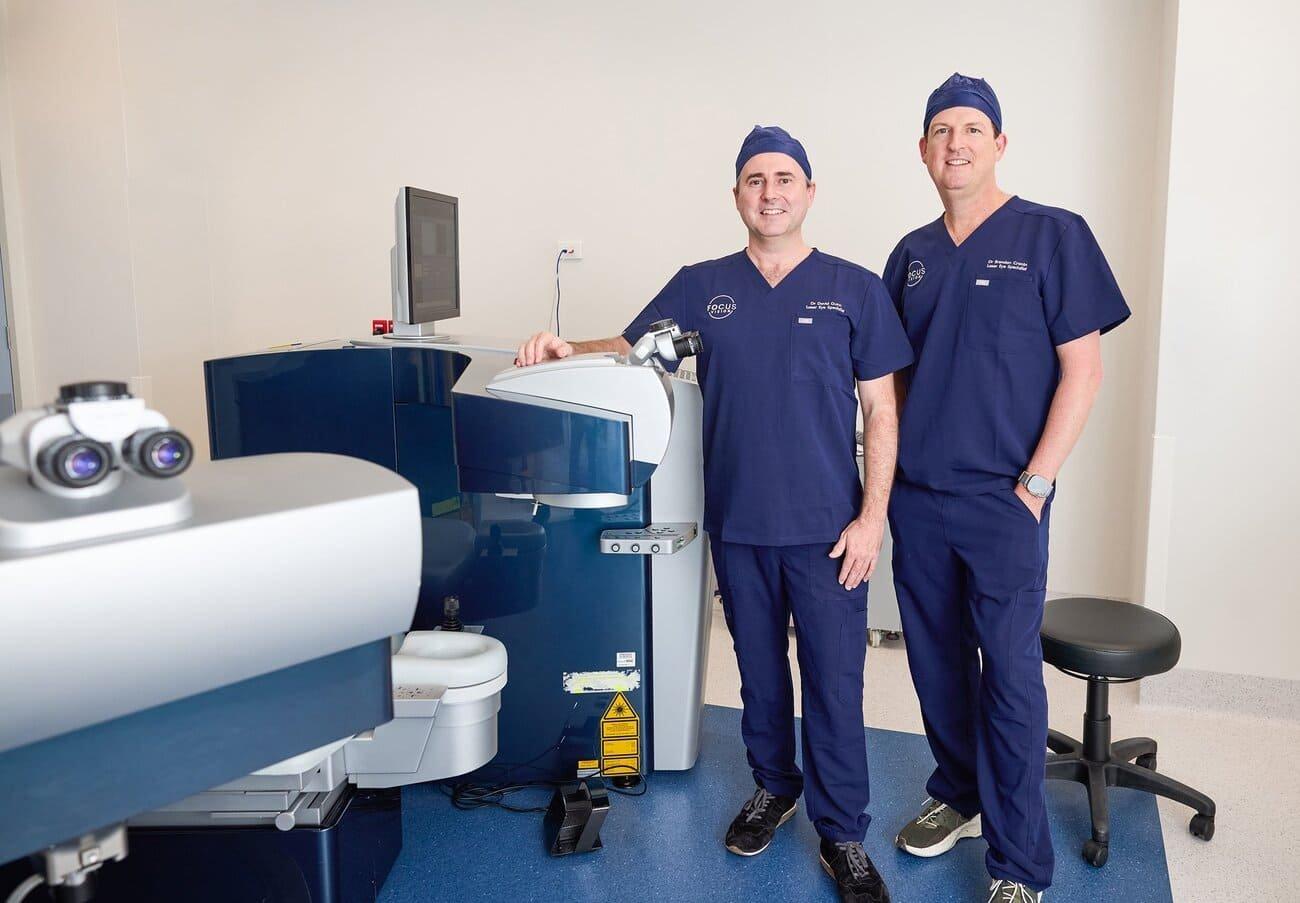
Laser cataract surgery is a minimally invasive technique that removes the cataracts and restores clear vision. During the procedure, the cloudy lens is removed and replaced with a premium, artificial intraocular lens tailored to your specific vision needs. This advanced method maps the eye in detail using imaging systems such as Optical Coherence Tomography (OCT). The laser then performs key steps of the surgery — the incisions, the circular opening in the lens capsule and the initial softening of the cataract — with a high degree of precision; in a large randomised trial the laser step itself proved safe, with visual outcomes comparable to standard phacoemulsification (FEMCAT trial, 2020).
What to Expect During the Procedure
Laser cataract surgery at Focus Vision is a straightforward, outpatient procedure. First, your eye will be numbed with anaesthetic drops to ensure your comfort. The laser will then create a precise incision to access the cataract. Next, the cataract is broken into smaller pieces for removal. Finally, our surgeons will insert a custom intraocular lens to replace the natural lens.
The procedure typically takes about 30 minutes, and most patients notice improved vision within a few days. Follow-up appointments will ensure your recovery is progressing smoothly.
The Benefits of Laser Cataract Surgery
Cataract surgery, with or without laser assistance, offers major benefits for many patients.
1. Restored Vision Clarity: The most immediate benefit of cataract surgery is the restoration of clear vision. Patients often report brighter, sharper, and more vibrant visual experiences.
2. Improved Quality of Life: With better vision comes greater independence and confidence. Patients can regain the ability to drive safely, navigate unfamiliar environments, and engage in activities that may have been challenging before.
3. Increased Safety: Blurred vision caused by cataracts can increase the risk of accidents, particularly falls. Cataract surgery enhances spatial awareness and reduces the likelihood of injury (Harwood et al., 2005).
4. Fast Recovery: Modern cataract surgery is a quick, minimally invasive procedure with a high success rate.
5. Overall Health Benefits: For many patients, improved vision leads to better mental health, as they feel more capable, confident, and socially engaged (PubMed 32220125).
Cataract surgery is a transformative procedure that not only improves vision but also significantly enhances a patient’s overall lifestyle and happiness. If you’re experiencing the symptoms of cataracts, consulting a specialist about this safe and effective treatment can help you reclaim the clear vision you deserve.
Get in Touch
Discover the life-changing benefits of laser cataract surgery by reaching out to our team of ophthalmologists at Focus Vision in Brisbane today. Call us on (07) 3239 5005 or email us at hello@focusvision.com.au.
We’re here to answer your questions, explore your options, and guide you in deciding if cataract surgery is the right choice for you. Start your journey towards clearer, brighter vision now!
References
- World Health Organization. Vision impairment and blindness. Fact sheet. who.int
- Femtosecond laser-assisted versus phacoemulsification cataract surgery (FEMCAT): a multicentre participant-masked randomised superiority and cost-effectiveness trial. Lancet. 2020. PubMed 31954446. thelancet.com
- Narayan A, et al. Laser-assisted cataract surgery versus standard ultrasound phacoemulsification cataract surgery. Cochrane Database Syst Rev. 2023;CD010735.pub3. cochranelibrary.com
- Guy’s and St Thomas’ NHS Foundation Trust. Cataract surgery - Having cataract surgery. guysandstthomas.nhs.uk
- Harwood RH, et al. Falls and health status in elderly women following first eye cataract surgery: a randomised controlled trial. Br J Ophthalmol. 2005. pubmed.ncbi.nlm.nih.gov/15615747
- Impact of cataract surgery on depression and cognitive function: Systematic review and meta-analysis. PubMed PMID 32220125. pubmed.ncbi.nlm.nih.gov/32220125