
Every so often a patient reads the very bottom line of the eye chart, the tiny letters most people have never managed, and asks whether something is wrong with the test. Nothing is wrong. Some eyes simply see better than the standard, and 6/3 is about as good as human vision gets.
So, what do those numbers mean, and what is the world actually like through eyes that sharp?
A quick refresher on the numbers
Visual acuity is written as a comparison. The first number is the distance you’re tested at, which in Australia is six metres. The second is the distance at which a person with standard eyesight could read the same line. So, 6/6 means you see at six metres what a standard eye sees at six metres. Perfectly normal.
6/3 flips that on its head. You’re reading letters at six metres that a person with normal vision would need to stand three metres away to make out. Put another way, your eyes resolve detail twice as fine as the accepted standard. In the older imperial notation this is 20/10 — sharper even than the 20/15 or better recorded in most professional baseball players (Laby et al., 1996).
What the world looks like at 6/3
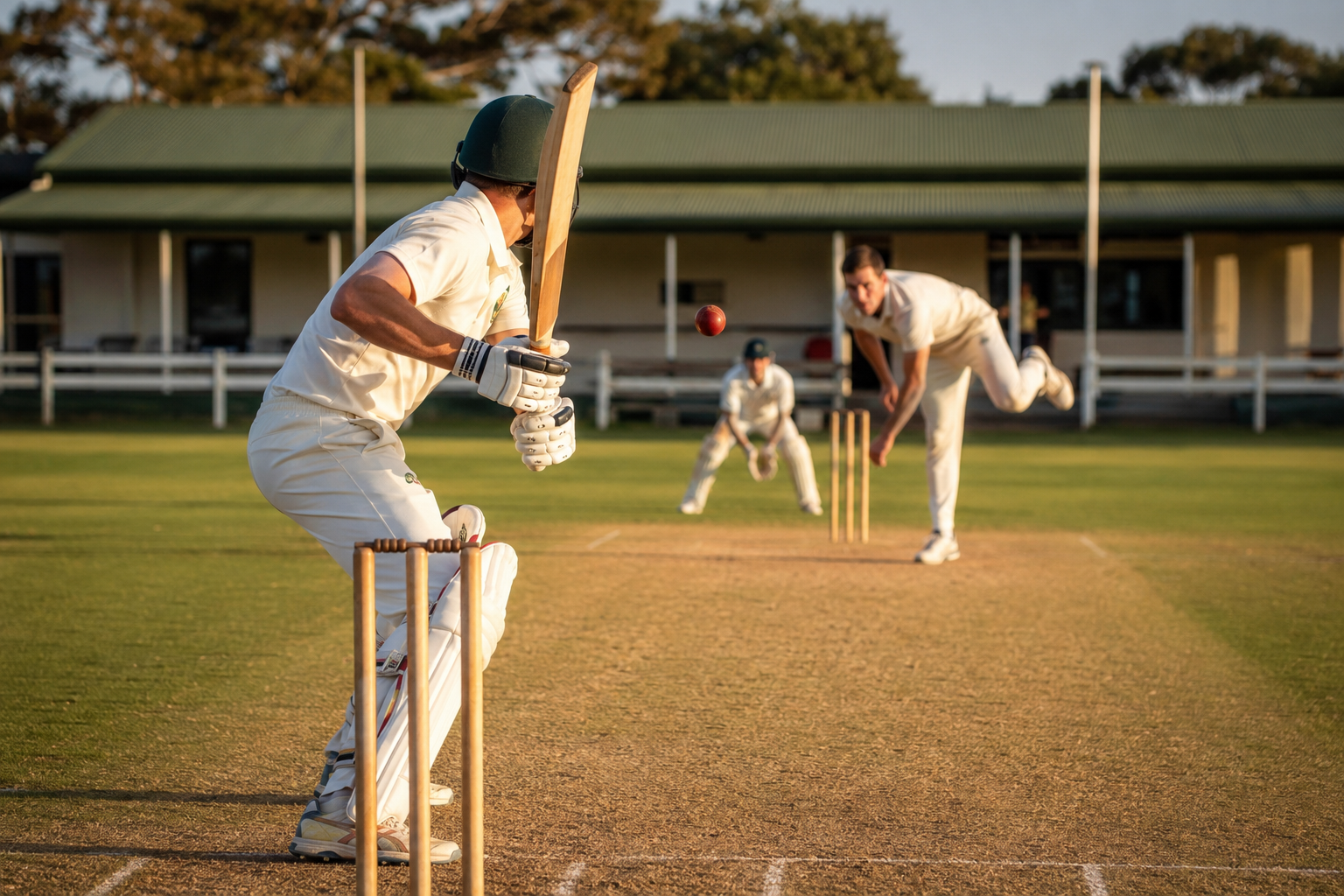
Here’s the honest answer: mostly the same, just noticeably crisper at distance. Someone with 6/3 vision reads street signs from further away, picks out a bird on a wire that a friend can’t find, and spots the cricket ball a beat earlier. Text on distant screens stays legible longer. Faces resolve across a wider street.
What 6/3 does not do is change the fundamentals. It won’t help you read fine print up close in your fifties, because presbyopia comes for every eye regardless of how sharp it once was. It doesn’t improve night vision, colour discrimination or peripheral awareness, which are separate faculties altogether. Acuity is one ingredient of good eyesight, and 6/3 is simply an unusually generous serving of that single ingredient.
Where does vision this good come from?

Partly the lottery of biology. Acuity is ultimately limited by the optics of the eye and the density of photoreceptors in the fovea, the tiny central patch of retina that does all our detailed seeing. Some people are born with optics and retinal wiring that sit at the favourable end of the curve, and young healthy eyes with no refractive error are the usual candidates.
Age matters too. The eye’s optics are at their cleanest in youth, and it’s common for acuity a line or two better than 6/6 to drift back toward the standard over the decades (Elliott et al., 1995). That’s ordinary ageing, not disease.
And then there’s the question we get asked most.
Can vision correction get me to 6/3?
Sometimes, though no honest clinic will promise it. Modern laser vision correction aims to remove refractive error as completely and cleanly as possible, and a proportion of patients do end up reading better than 6/6 unaided after treatment, particularly younger patients whose eyes were capable of it behind their glasses all along. The procedure can only unlock the acuity your retina and neural wiring support. If your best corrected vision in glasses is 6/6, surgery is not going to conjure 6/3 from it; if your eyes have always been capable of better, removing the refractive error may let them show it.
That’s why the suitability assessment matters so much. Detailed measurement tells us what your eyes could realistically achieve, and that becomes the target we plan around, rather than a number from a marketing brochure.
Should you worry if you don’t have 6/3?
Not for a moment. 6/6 is the standard for normal sharp vision, comfortably beyond every visual demand of ordinary life including an unconditional driver’s licence (Austroads). 6/3 is a bonus, not a benchmark. The figure worth paying attention to is your own best corrected acuity over time, because a change in that number is what tells us something in the eye deserves a closer look.
Curious what your eyes are actually capable of without glasses or contacts? A refractive assessment measures exactly that. Book an assessment with Focus Vision.
References
- Elliott, Yang, Whitaker. Visual acuity changes throughout adulthood in normal, healthy eyes: seeing beyond 6/6. Optom Vis Sci. 1995 (March). pubmed.ncbi.nlm.nih.gov/7609941
- Cone parameters in different vision levels from the adaptive optics imaging. PubMed Central, PMC8078260. ncbi.nlm.nih.gov/pmc/articles/PMC8078260
- Laby DM, Rosenbaum AL, Kirschen DG, et al. The visual function of professional baseball players. Am J Ophthalmol. 1996;122:476-85. sciencedirect.com/science/article/abs/pii/S0002939414721063
- Austroads. Assessing Fitness to Drive (AP-G56): Vision and eye disorders. austroads.gov.au
- American Academy of Ophthalmology. What Is Presbyopia? EyeSmart. aao.org/eye-health/diseases/what-is-presbyopia